Showing posts with label Video. Show all posts

Tuesday, April 23, 2013

Satire: How to get the world to pay attention to you.

Originally posted 2/13/12.

From an actual New York Times Op-Ed piece:
There are dozens of initiatives President Obama could undertake to strengthen our economic security. Here is one: He should enter into closed-door negotiations with Chinese leaders to write off the $1.14 trillion of American debt currently held by China in exchange for a deal to end American military assistance and arms sales to Taiwan and terminate the current United States-Taiwan defense arrangement by 2015 ….


Today, America has little strategic interest in Taiwan, which is gradually integrating with China economically by investing in and forming joint ventures with mainland Chinese firms. The island’s absorption into mainland China is inevitable ….


There will be “China hawks” who denounce any deal on Taiwan as American capitulation, but their fear of a Red China menacing Asia is anachronistic. Portraying the United States as a democratic Athens threatened by China’s autocratic Sparta makes for sensational imagery, but nothing could be further from reality.
Question: How do you feel about this? Does it matter if the United States is there to help "protect" Taiwan? Does Taiwan need protecting? What's so bad about China "taking care"of Taiwan, anyways?


Ok, so I realize that asking those types of questions in Taipei is grounds for dismissal, if not a punch in the head. However, please believe me when I say I'm not in favor of Beijing—I'm quoting some interesting satire written about a current event.
A satire is a literary work that attacks or pokes fun at vices, abuses, stupidity, and/or any other fault or imperfection. Satire may make the reader laugh at, or feel disgust for, the person or thing satirized. Impishly or sardonically, it criticizes someone or something, using wit and clever wording—and sometimes makes outrageous assertions or claims. The main purpose of a satire is to spur readers to remedy the problem under discussion. The main weapon of the satirist is verbal irony, a figure of speech in which words are used to ridicule a person or thing by conveying a meaning that is the opposite of what the words say.
One of the true masters of satire is my buddy, Stephen Colbert. Here, he makes a convincing argument that the best way to take care of endangered animals is to put them on a plate.


WOW.

Today for class, we're going to read Jonathan Swift's "A Modest Proposal," the satire from which all satire seems to have generated. As you read, please understand that this is all done tongue-in-cheek, and that Swift is really representing the Irish Catholics, not the English Protestants.

After this, the assignment will be for you to write your own modest proposal essay. Now, the rules of this are:

  • You must pick a real/major political/social issue in the world (e.g. drugs, murder, the environment).
  • Paragraph 1—Introduction. Focuses on the actual problems of your issue (e.g. Why it's so bad, how bad it is, how there's been no solution to it)
  • Paragraph 2 [short paragraph]—"I now will humbly propose my solution..." You give your idea of how to fix the problem. It may be a real solution, but it'd be more interesting if you gave us a crazy, ironic-flavored solution to the problem. Tell us that this will take care of your issue in 3 ways.
  • Paragraph 3—Way #1
  • Paragraph 4—Way #2
  • Paragraph 5—"Disarming." Here, you acknowledge why people might have a problem with your solution, but then you attack their attack. Brilliant.
  • Paragraph 6—Conclusion. Make us feel happy about why your possibly idiotic reason is the only reason out there. 
Have a first draft by next class!

Thursday, March 14, 2013

Missed the Lunch with Communications Class series? Enjoy them at your own leisure.

This week, Communications Class did its second third fourth fifth (!) ever Lunch with Communications Class speeches, presenting 8 different Demonstration speeches by 8 different speakers. In case you didn't get a chance to check out these awesome speeches, here they are, for your viewing pleasure:


Jass
Enoch
Antoine
Judy
Jason
Joyce
Annika
Ivy

Sunday, November 25, 2012

British Lit: Who is Akira Kurosawa?

Originally posted 11/27/11.

In case you're interested in 1) how Mr. Webb spent his break, and 2) what's happening next in British Lit class, take a peek at this awesome-sauce movie trailer.


Any thoughts?

Sunday, October 28, 2012

Tweet, tweet, tweet... If not yet, you soon will be.


A couple of classes have either begun using or will begin using Twitter as an educational tool. I've used Twitter for a long time myself (Follow me here, @EvilMrWebb), but I'm only now getting into the idea of students to use it to express themselves mid-class.


The easiest way to explain it is that tweeting is essentially a text message you send to the entire world. There are different ways to talk to different people or different groups of people, but, in a nutshell, it's a public text message conversation. You're not supposed to be able to say everything you want; part of the game is being forced to say what you want to in less characters (140 to be exact). As you tweet more, you'll find yourself thinking in 140-character blasts, and in no time, you'll be a master at this social network.

So, before I require it from you, get over to Twitter and sign up for an account to figure out what this is all about!

Tuesday, October 16, 2012

Why you stink at arguing: studying rhetorical fallacies to improve your persuasion skills

Originally posted 11/21/11.

Do you regularly get pwnd by your teacher or friends because you lack the basic persuasion and/or debate skills necessary for your success? In class today, I went over the following presentation:

As I said at the end of the presentation, you have one assignment: Go to  and find 3 videos that exemplify one fallacy from each of each of the categories of rhetorical fallacies
  • Emotional fallacies [pathos]
  • Ethical fallacies [ethos]
  • Logical fallacies [logos]
Embed (not link to) each example into a blog post with 1¶ (each) explaining why it is an example of that fallacy.

Ok, so there's that! Good luck!

Saturday, October 6, 2012

Missed the Lunch with Communications Class series? Enjoy them at your own leisure.

Last week, Communications Class did its second third fourth (!) ever Lunch with Communications Class speeches, presenting 6 different Demonstration speeches by 6 different speakers. In case you didn't get a chance to check out these awesome speeches, here they are, for your viewing pleasure:


James
Jessica L.
Mark
Gabriella
Jessica G.
Lillian

Wednesday, May 9, 2012

As requested: Why I Tossed Your Résumé.

Click me for the blogpost!
Communications students seemed to really value the awesome advice in Brent Miller's awesome blogpost about the common mistakes in resumes, so, as you begged for, here's his post. Use it this weekend as you prepare your resumes for class on Monday. Remember that I want it printed out, and, even though resumes are usually only one page, this one may be two pages long (this time).

Also, the most awesome of you will watch this preview of what your interviews may look like.

Sunday, March 11, 2012

Missed the Lunch with Communications Class series? Enjoy them at your own leisure.

Last week, Communications Class did its second third ever Lunch with Communications Class speeches, presenting 10 different Demonstration speeches by 10 different speakers. In case you didn't get a chance to check out these awesome speeches, here they are, for your viewing pleasure:


Jessica
Angela T.
Betty V.
Tristan
Tiffany
Mandy
Krikki
Thomas
Rachel
Janelle

Saturday, March 3, 2012

A weekend reminder for those Communications class fools...

Let me guess: you're in Communications class, and you forgot what was due by next class. Don't worry--you stink. Here it is again:
  1. Video Self-Evaluations: By Monday, have a Video Self-Evaluation completed. You can either post them to your blog (through Scribd), or you can hand it in on paper (but you've got to print it out yourself).

  2. 2-3¶s about Demo(s) #1, #2, and #2.5: So you've done 2 Demo speeches, and now, you're going to do a 3rd 2.5th Demo in the cafeteria, next week, in front of everyone*. Now, like I said, you can choose to do a 3rd, different Demo topic, or you can just redo one of the first 2 you've already done. No matter what you decide, I would like you to write 2-3 solid paragraphs about:

    1. how you did on both your Demo #1 and Demo #2.
    2. how you have improved in this class so far.
    3. which speech you plan on doing in front of everyone (and why).
    4. what changes you must make to amaze your new audience.

    Remember, you are to post these to your blog, and the sooner you post them, the happier I'll feel as I grade them.

  3. Bring an ouline: Lastly, bring the outline of whatever speech you plan on redoing (or, if you're going to do a new speech, bring the completed new outline) on your iPad, preferably on QuickOffice (or some type of editing program). You'll be work-shopping the outline with some partners, and they'll be trying to make your speech something that won't embarrass me in front of the whole cafeteria even better.
Done and done. Now, if you'll excuse me, Mrs. Webb and I are about to partake in the annual "For Both of Our Birthdays, Why Don't We Go To A Concert"Concert. This year, the band will be the great Death Cab for Cutie. What a kick-butt Saturday night!


*Everyone that stays in the cafeteria for lunch, that is.

Wednesday, February 29, 2012

Reap what you've sown: Rate your POV movie partners

As we continue to read The Diary of Anne Frank, we need to get some other book-keeping stuff done, and one of those things has to do with your  POV movie projects. If you remember, I told you, at the beginning of that project, the four things I'd need from you at the end:

  • POVs in a Fable chart 
  • 4 scripts, one for each perspective 
  • 4 movies, edited, 2-3 minutes long each 
  • Group rating quiz, at the end of the project, where you will rate how your fellow group-members contributed to this project 

Now, pretty much everyone has turned in the 4 movies, and I have a few groups 4 scripts—if I don't have those, I need them. I also need the POVs in a Fable chart, which is the back side of the sheet I gave you.

The big, final thing I need is that Group rating quiz, where you are to honestly evaluate how each of your classmates contributed. It is very important that you're absolutely honest—none of the other group members will know what you rate them as. I'll be the only one who knows their scores, so don't feel like if you give them a bad score, it'll get back to them.

To take that quiz, either scan in the QR at the top or click here. You'll need to select the group member and do the entire quiz for each group member, so expect to take this (short) quiz 4 or 5 times! By the way, please rate yourself!

Tuesday, February 28, 2012

2nd Annual Point of View videos

It took me the entire "extended" weekend, but I finally got around to watching all of English II's Point of View movies, and I've got to say—way to go! Everyone (with the exception of one group, which has faced a few technical issues in completing theirs) did a wonderful job of showing First Person, Third Person Limited, Third Person Omniscient, and Objective through their four films, and I wanted to say how I proud I am of you! Here they all are, for your perusal:


English II—A-day class


Billy, Krikki, Martin, Miyuki: The Donkey in the Lion's Skin

Videos

---INSERT VIDEO HERE---

David, Grace, Kevin M., Max, Takako: The Hare with Many Friends

All videos


Betty, Eddie, Kelly, Wade: The Man with Two Wives

Trailer


Third Person (Omniscient)


Third Person (Limited)


First Person


Objective


Angela, Belle, Calvin, Samuel: The Ant and the Grasshopper

Third Person (Omniscient)


Third Person (Limited)


First Person


Objective


English II—B-day class


Alex, Cameron, Kathrina, Sally: The Lion and the Mouse

Third Person (Omniscient)


Third Person (Limited)


First Person


Objective


Ben, Kevin C., Nancy, Rachel: The Man Woman, the Boy, and the Donkey

All videos


Aleena, Amanda, Joanne, Robert: The Goose Who Laid Golden Eggs

Trailer


All videos


Amy, Christine, Jonathan, Joyce: The Tortoise and the Hare

Third Person (Omniscient)


Third Person (Limited)


First Person


Objective


Brian, Grace C., Jass, Sabrina: The Boy who Cried "Wolf"

Third Person (Omniscient)


Third Person (Limited)


First Person


Objective


Fantastic job to all the English II groups for all their hard work and innovative movies!

Sunday, February 12, 2012

Wednesday, February 1, 2012

What was what in that Owl Creek video?


As per my Spring-ly custom, English II students (and some American Literature students) fell victim were treated to a reading and a viewing of Ambrose Bierce's famous short story An Occurrence at Owl Creek Bridge, a story about the musings of a man about to be hanged. One of the most famous things about this story is the way that Ambrose Bierce subtly switches between literary points of view in his treatment, tricking the readers into thinking fantasy is reality.

The assignment, if you remember, was to watch the video (embedded below, in case you need it again) and determine where (if anywhere) the following POVs were show:

  • First person
  • Third person (Limited)
  • Third person (Omniscient)
  • Objective (or Dramatic, as Mr. Kabel calls it)
This was supposed to be 3¶s, one for each that I saw in the film. (You might find a fourth one, but I didn't, so if you did and you can justify it, I might throw you some extra points.)


What makes a comedy a Shakespearean comedy?


So you've officially run the gamut, huh? Learning about iambic pentameter, 2.5 Shakespearean tragedies, and now, three Shakespearean comedies. You're welcome.

As we're just about ready to finish up with the greatest English writer in history, I wanted you to take a moment to deeply evaluate the three comedies that we watched/read/watched and analyze what they're really made of. As I said in class, try to go deeper than the obvious "TEACH-AH, THEY'RE ALL ABOUT PEOPLE FROM A LONG TIME AGO BEING IN LOVE!!!" That will make me angry. And you wouldn't like it when I'm angry.

Instead, focus on the similarities and differences in themes like (but not limited to) these:
  • Gender roles (i.e. How to men/women act?, How do people treat men/women?, What are the expectations for men/women?, How do men/women act towards expectations?)
  • Power (i.e. Who is usually in power?, How do people treat those in power?, Do those in power act fairly?, How is the "dummy" or weakling portrayed?)
  • Love (i.e. What is real love?, What is fake love?, Is all love equal/How?)
  • Humor (i.e. What must Shakespeare consider "funny"?, What makes something funny?Is humor timeless?)

Bonus—Not a comedy (actually, a tragedy), but hilarious nonetheless:

Friday, January 20, 2012

"I'm not sure what to do with my hands..."

2 things today for Communications class, before you head out on break:
  1. This:


  2. Look at this list of Demonstration speech topics:


    Remember, what you're supposed to do is to pick 5 different Demonstration speech topics (that you can actually do) and write 5¶s—one for each of your 5 picks. Again, write something like this:
    1. How to make a peanut butter and jelly sandwich*—It's easy to make a PB&J sandwich, but I would teach not only how to make one, but different things you can do to make it delicious (e.g. different ingredients, tricks with temperature).
    *You cannot use that in your own list.
If you could get that done by the Sunday, January 29th before we get back (so I can check it on your blog and have an answer for you), that would be great! Have a wonderful and relaxing break!

Thursday, January 12, 2012

Every Shakespeare comedy in less than 4 minutes

The A-Day British Lit class watched a video on Thursday of the Reduced Shakespeare Company's interpretation of the Bard's comedies. Here it is for them (in case they need the refresher).


Remember: the assignment is to compare this to what we've seen in Twelfth Night and 10 Things I Hate About You / Taming of the Shrew.

*** NOTE FOR FRIDAY'S B-DAY CLASS: You do not have to do this assignment... yet. You'll probably end up watching this video after Chinese New Year break, and then you can do it. Just chill out for now! ***

Tuesday, December 13, 2011

Another dose of awesome: Animaniacs do Hamlet

When I posted the Greatest MacBeth Clip on YouTube EVER, I lol'd and thought "Wow, those cartoons awesomely did an adaption of Shakespeare. There is no way to improve that."

I was wrong.

Presenting, Hamlet and Yorick...

Wednesday, November 30, 2011

蜘蛛巣城 = MacBeth (?) You're about to find out.


Pretty cool film, huh? Now comes the bad part. (You had to know there was a bad part.)
  1. The Criterion Essay
    First off, read the following essay that looks deeply into the differences between MacBeth and Throne of Blood. Stephen Prince, the author of the essay, does a heck of a job of not just saying "THE DIFFERENCE IS THAT ONE IS IN JAPAN AND THE OTHER IS IN WHEREVER MACBETH IS, TEACH-AH!" If Prince writes this essay for me, I'm giving him an A. If a students uses the comparison above... well... you'll have the chance to make this paper better, next Fall, when you take this class again. [READ: You will fail.]
  2. Secondly, please post a comment on that article following the rules of commenting from earlier in the semester:

    1. compliment the writer in a SPECIFIC way.
    2. ask a question related to the post.
    3. add new information, opinions, or perspectives.

    I will give you points for doing this (or give you a 0% for not doing it) by NEXT CLASS, so please do this as soon as possible!
  3. Finally, the hard part: by NEXT CLASS, I want a first draft of a 5¶(minimum) essay. To make this really easy on you, I have graciously provided you with the perfect thesis sentence:
    The key difference between William Shakespeare's MacBeth and Akira Kurosawa's Throne of Blood is [WHATEVER YOU THINK], easily seen through [EVIDENCE A], [EVIDENCE B], and [EVIDENCE C].
    This sentence must be in your essay for get points for the thesis. You are not required to use that sentence in your essay, but if you use your own thesis, it must be better than mine. And it won't be. Good luck.

    You MUST bring me your first draft TYPED UP AND PRINTED OUT by NEXT CLASS. Failure to do so will result in an automatic 10% markdown of your final essay score. We will be doing 7i together in class, so not getting it to me means you didn't do it. Make sure it happens.
If we have time in class, we'll read the article together; if not, it is your responsibility to do on your own. Same with commenting. No excuses on getting the first draft done, either. The semester is not over! MANY of you have been complaining about your grades being low—this is your chance to pull them up. Unfortunately, it's also the chance for you to ruin them, so work hard!

Friday, November 18, 2011

How do you explain sonnets to a 5-year-old? ANYANG!

I know I keep talking to my British Lit students about writing their sonnets and all kinds of different things regarding poetry, but it's 1) awesome to study, and 2) hard enough I want to KEEP talking to you about it and giving you pointers. Recently, you guys had an assignment to make those Show Me or Screen Chomp videos explaining how sonnets work. [I HATE SCREEN CHOMP NOW. JUST THOUGHT YOU SHOULD KNOW.] Everyone did pretty good jobs on them, but the most outstanding one, in my opinion, came from little Anyang Esther. She explained masculine/feminine rhyme, rhyme schemes, and iambic pentameter so well that I thought you should all take a peek at her awesomeness. Look:


Thanks for rocking out, Esther! 5 points EC to you!

Thursday, October 27, 2011

HINT: Students ought to check out a couple of cool iPad screencasting apps!

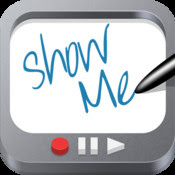
So, I've been looking for some cool new iPad apps lately, and I stumbled across two (free!) that I think are pretty interesting: Show Me Whiteboard and Screen Chomp. Both of these apps are designed for screencasting, which is essentially make a video of something actually happening on your iPad and putting it online to share. With each app, you can click record, draw on the screen, add pictures, and even talk out loud (to explain what you're doing), and then upload that to the internet and post it on your blog or web site or whatever. This would be a pretty cool technology to have if you were going to show your teacher how to do something, like making diagrams, explaining maps, or, I don't know, how about explaining poetry (?).

Both of these apps work about the same way, but I think that Screen Chomp is, frankly, a little more aimed for elementary school students. Show Me has a bit more options and comes across as a little bit more "grown up," so I'm going to show you really quick how to use it.

To the right is what the main app screen for Show Me looks like. To use it, you click the little record button, which is the 2nd to the bottom. (It would be where the F is, but it will look like instead of .) Then... you just start drawing. And talking. And it gets it all down. When you're finished, you click the  F button again (which should be in a shape), and it will stop.

A rundown of the buttons:
A: The pen. For drawing (obviously). You can click on any color and then the pen, and it will draw in that color.
B: The eraser. Clicking on that and "drawing" will erase individual sections of the drawing.
C: Full eraser. Clicking on that will erase the entire screen.
D: Undo.
E: Change the background from all-white (default) to any picture in your photo library.
F: The aforementioned Record/Play/Stop recording button.
G: Export. Once you create an account, you can get the embed code and put your video into your blog!
To prove how easy it is, check this out:


From my experimentation, Screen Chomp works essentially the same way. Another reason I don't like it as much, though, is it only gives you, like, 3 colors for drawing. And again, just seems waaay more childish. My opinion, though.

So, try it out Show Me a few times—who knows, you might need it soon! (HINT HINT)